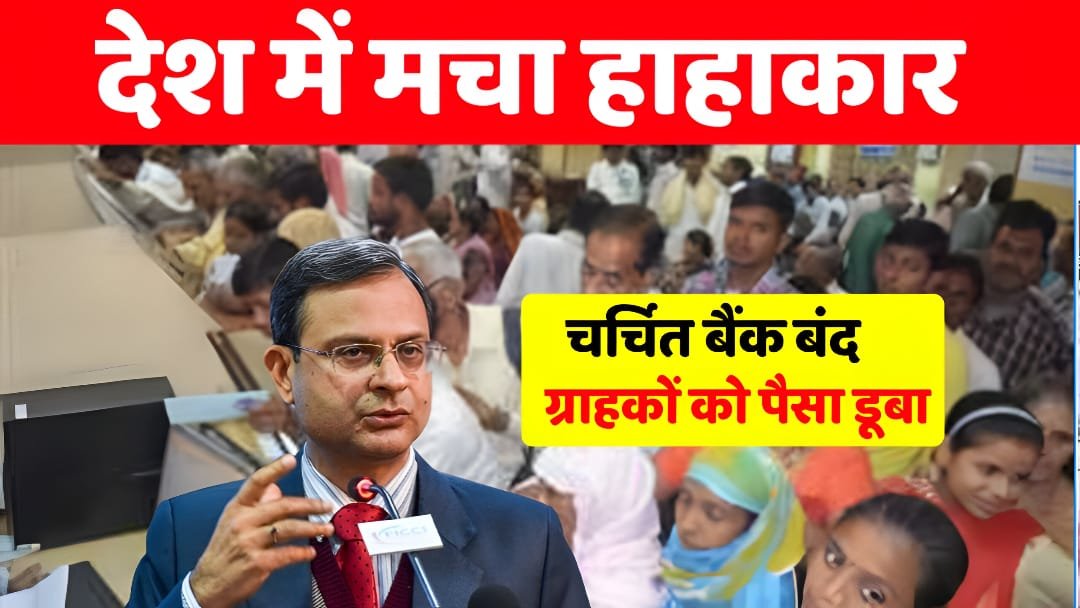
The country’s banking system has been shaken as the Reserve Bank of India (RBI) has issued an order to immediately halt services of a prominent cooperative bank. This decision has created chaos at bank branches, as customers are panicking about whether their hard-earned money will be lost. RBI has taken this step considering the bank’s declining financial condition and financial risks to protect public deposits in time.
Why Was the Bank Shut Down?
When a bank’s financial condition deteriorates to the point where it cannot manage its customers’ deposits, the RBI implements special guidelines on such banks. The purpose is to prevent the bank from misusing its resources and protect customer interests.
In such cases, all major banking services—such as withdrawals, transactions, opening new accounts, and issuing loans—are limited or temporarily suspended. This action helps prevent further financial losses and protects depositors.
Will Your Deposited Money Be Lost?
Upon hearing such news, customers first wonder whether their money is safe or not. Here, it’s important to know that all deposits in authorized banks in India are covered by deposit insurance of up to ₹5 lakh provided by the RBI.
This means that even if the bank completely fails, customers can still recover up to ₹5 lakh—whether it’s in savings accounts, fixed deposits, or current accounts. Therefore, most retail customers need not panic about losing their money entirely.
What Should You Do Now?
If you also have an account with this bank, first and foremost, don’t panic. During such times, it’s essential to carefully read the official notices or website information issued by the bank.
Additionally, keep all necessary documents safe, including passbooks, statements, and Aadhaar linking records. Furthermore, ensure your mobile number and email are updated with the bank so that any information reaches you on time.
Steps to Take Immediately:
- Monitor official RBI and bank communications regularly
- Keep all banking documents and statements organized
- Update your contact information with the bank
- Avoid making panic decisions based on rumors
- Contact bank customer service for clarification
Can the Bank Resume Operations in the Future?
RBI’s decision is not necessarily permanent. To improve the bank’s condition, RBI keeps it under surveillance for a specific period. If the bank improves its financial situation during this time, its services can be resumed.
Moreover, sometimes weak banks are merged with stronger banks, ensuring both the safety of customer deposits and continuation of services. This merger process often provides better security for customers than the original bank.
Understanding Deposit Insurance Coverage
The Deposit Insurance and Credit Guarantee Corporation (DICGC) protects deposits up to ₹5 lakh per depositor per bank. This coverage includes principal and interest amounts across all account types in the same bank.
However, deposits exceeding ₹5 lakh may face partial recovery depending on the bank’s liquidation proceedings. Therefore, it’s advisable to spread large amounts across multiple banks to maximize insurance protection.
Frequently Asked Questions
Is my money completely safe if the bank closes permanently?
Deposits up to ₹5 lakh per depositor are protected by DICGC insurance. You will receive this amount even if the bank fails completely, though it may take some time to process.
How long does it take to get insurance money back?
The insurance claim process typically takes 2-6 months from the date of bank closure. DICGC works to settle claims as quickly as possible once the bank is officially liquidated.
Can I withdraw money immediately when RBI restricts a bank?
Usually, RBI allows limited withdrawals for essential needs during the restriction period. The exact amount and conditions are specified in the RBI’s official order for each case.
What happens to my loans if the bank closes?
Your loan obligations continue even if the bank closes. The loan portfolio is typically transferred to another bank or handled by the liquidator, and you must continue payments as per original terms.
Should I immediately transfer my account to another bank?
Wait for official instructions from RBI and the bank before taking any action. Hasty decisions during panic can lead to unnecessary complications and potential losses.
Disclaimer: This article is based on various media reports and RBI’s public guidelines. The information provided is for public assistance. Please verify with the concerned bank or RBI’s official website before making any financial decisions.
